
The Hidden Cost of "We'll Sort the Tech Later"
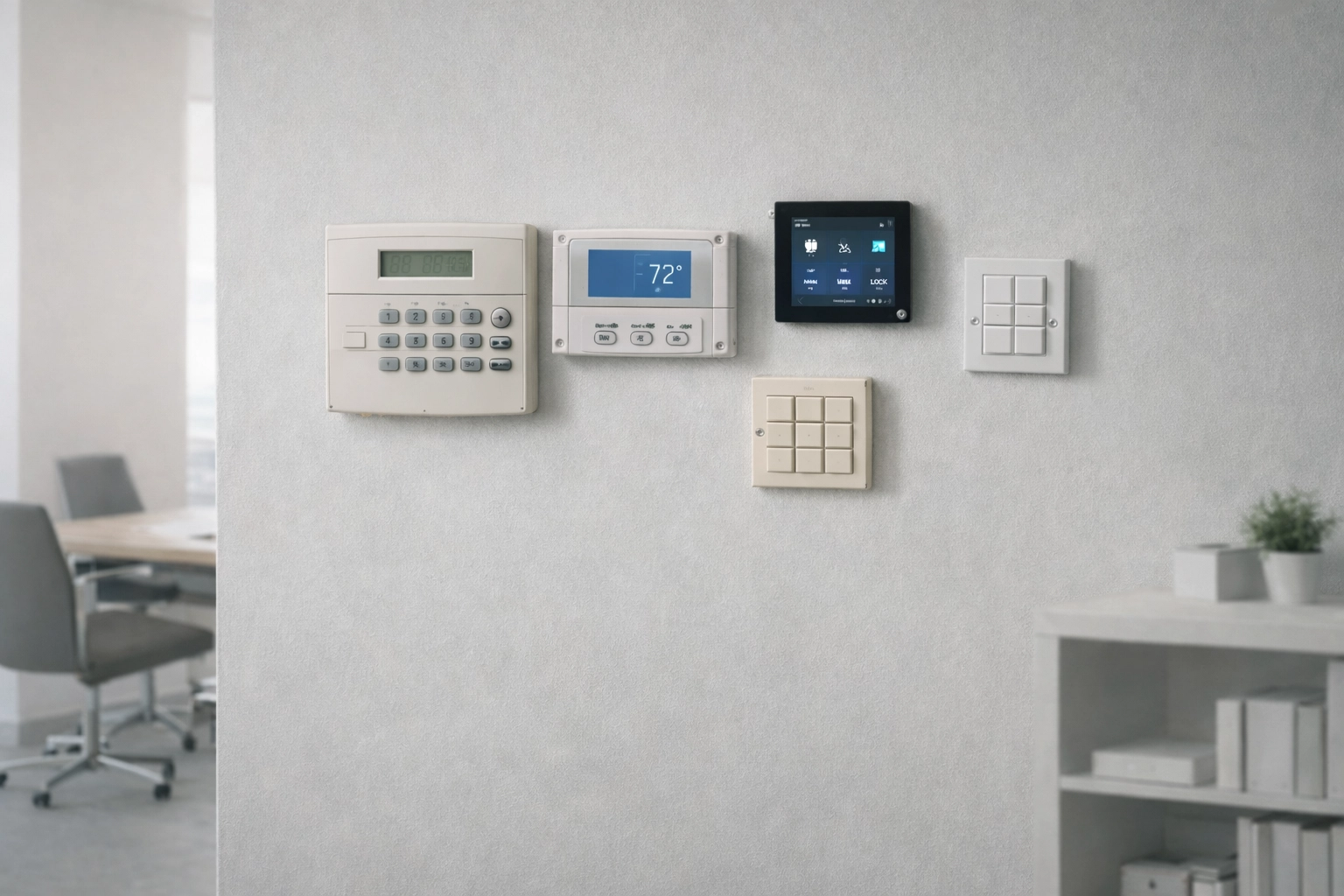
There's a phrase that sends a quiet shiver down the spine of anyone who's ever stood in a beautifully finished space, only to realise that something fundamental has been forgotten. "We'll sort the tech later." Four innocent words, often spoken with good intentions during the early design stages, that carry within them the seeds of aesthetic compromise, budget blowouts, and the kind of project delays that turn dream builds into drawn-out nightmares.
If you're a designer, architect, or specifier reading this, you've likely witnessed the fallout. Perhaps you've watched as a perfectly proportioned wall: one you spent weeks getting just right: was suddenly marred by surface-mounted trunking because there was nowhere to hide the cables. Or maybe you've had that uncomfortable conversation with a client about why their pristine Italian plaster now needs to be chased out, patched, and redecorated before they've even moved in.
The truth that many in the industry are only now beginning to fully appreciate is this: technology integration isn't an afterthought that can be neatly bolted onto a finished design. It's a fundamental layer of the built environment that, when ignored until the eleventh hour, creates costs that ripple far beyond the immediate budget line.
The Illusion of Later

There's something seductive about deferring technology decisions. In the early stages of a project: when everything exists in mood boards, material samples, and elegant CAD drawings: the temptation is to focus on the tangible, the visible, the things clients can immediately understand and fall in love with. Light fixtures, joinery details, that perfect shade of off-white for the walls. Technology, by contrast, feels abstract, complicated, something that can surely be "figured out" once the important design work is done.
This thinking, however reasonable it might seem, fundamentally misunderstands the nature of modern smart home installation and structured cabling requirements. Unlike a pendant light that can be specified and installed at the finishing stage, the infrastructure that powers contemporary home automation systems needs to be woven into the very fabric of a building. Conduits, back boxes, server locations, power supplies: these elements need space, routing, and coordination that simply cannot be retrofitted without compromise.
The research bears this out in stark terms. Organisations that delay technology adoption face compounding financial drains that far exceed the upfront investment of doing things properly from the start. Whilst those studies focus on corporate environments, the principle translates directly to residential and commercial design projects. The cost of retrofitting technology infrastructure can easily run to 40% more than early integration, and that's before you account for the aesthetic and timeline impacts.
Wall Acne and Other Design Casualties
Among technology professionals, there's a term for what happens when cabling and equipment need to be surface-mounted because there's nowhere else to put them: wall acne. It's an apt description. Just as a blemish draws the eye away from otherwise clear skin, a trail of white plastic trunking or an oversized access panel destroys the clean lines and careful proportions that define good design.
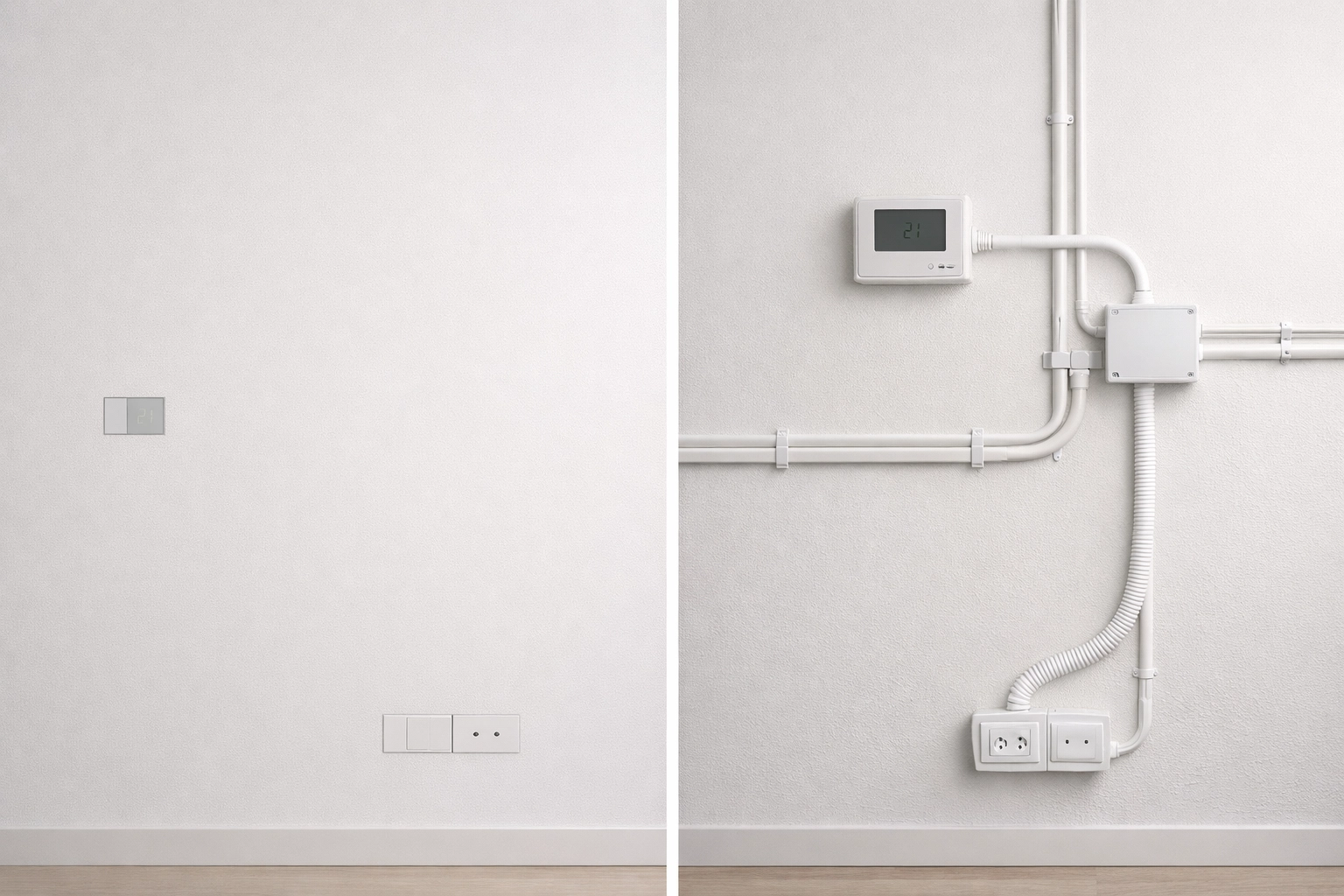
A recent project still sticks with me, because the design was genuinely calm and considered, and then the technology arrived like an afterthought with muddy boots. The walls were finished, paint cured, joinery signed off, and only then did it become clear that nobody had coordinated lighting, HVAC, and security controls as a single plan, so each trade turned up with their own keypad, their own stat, their own panel, and their own idea of “the best place” to put it. Within a couple of days, one beautiful section of wall had a lighting keypad, an AC controller, an alarm panel, and a small touch screen clustered together, each from a different manufacturer, each a different size, each installed at a slightly different height, and the space went from serene to visually noisy in a way that’s hard to unsee.
The visual impact is only part of the problem. When technology isn't planned from RIBA Stage 0 or 1, designers lose control over where equipment is located, how wiring is routed, and ultimately, how the technology serves: or disrupts: the spatial experience they've worked so hard to create. A media room that should feel like an intimate cinema becomes cluttered with visible speakers and equipment racks. A minimalist kitchen gains an unwelcome collection of control panels and charging points that were never part of the design intent.
This isn't about technology fighting against design. It's about technology being treated as an adversary rather than an ally, something to be managed and contained rather than thoughtfully integrated.
The Hidden Arithmetic of Delay
Beyond the aesthetic compromises, there's a financial arithmetic to late technology integration that many projects fail to properly account for. The costs aren't always visible in a single line item, which makes them easy to miss until they've already accumulated.
Consider the productivity drain. When technology infrastructure isn't planned early, it creates a cascade of coordination problems downstream. Electricians waiting for data cabling to be specified. Plasterers unable to finish walls because back box locations haven't been confirmed. AV installers arriving to find no provision for equipment racks or no cable routes to speaker locations. Each delay ripples through the project schedule, extending timelines and incurring holding costs that weren't in the original budget.
The real nightmare, though, is what happens when the client quite reasonably says, “Can’t we just make it work properly?” and the honest answer becomes, “Yes, but we’ll need to run more cables.” At that point you’re no longer “adding tech”, you’re performing minor surgery on a finished home: lifting floors you promised would never be touched again, opening freshly skimmed walls, chasing pristine plaster, then trying to make good so it doesn’t look like the room has been patched together. It’s costly, it’s disruptive, and it quietly unravels trust, because the programme takes a hit while each trade waits on the others, and all of it could have been avoided with early coordination between electricians, HVAC, security, and the integration team.
Then there are the direct remediation costs. When technology needs to be retrofitted, it rarely happens cleanly. Finished surfaces need to be opened up, meaning redecoration, making good, and in some cases, complete replacement of materials that were supposed to be specified once and installed once. The Italian plaster that took a craftsman three days to perfect now needs a week's worth of remedial work. The bespoke joinery gains visible cable outlets that were never part of the design. The herringbone oak floor has cable channels routed through it because there's no other way to get power to the desired locations.
These aren't hypothetical scenarios. They're the reality of projects where technology was considered "later."
The Partner, Not the Problem
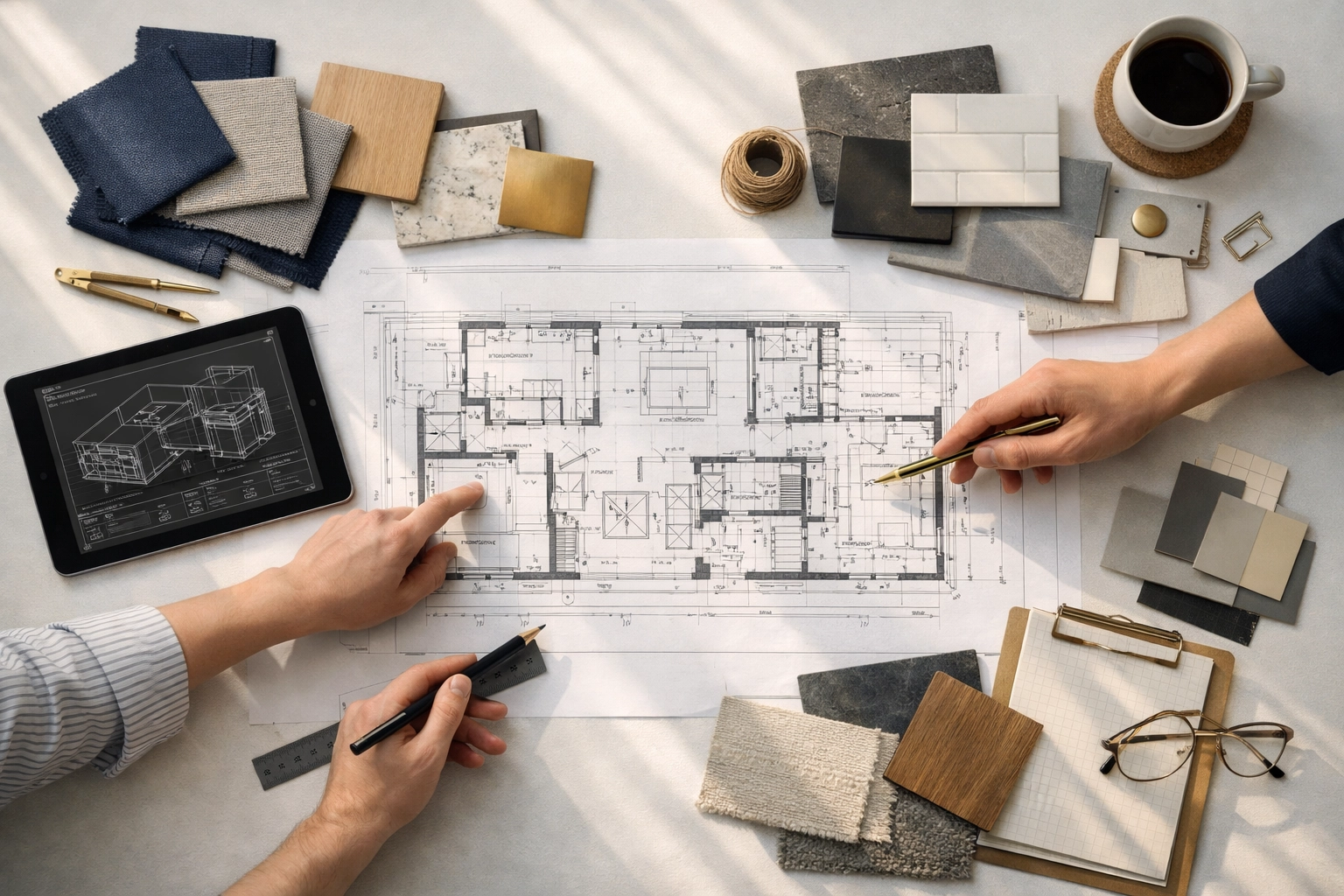
Here's what changes everything: approaching technology integration not as a problem to be solved, but as a design partner from day one. When a smart home installer like Liv. is involved from RIBA Stage 0 or 1, technology stops being the thing that compromises your vision and becomes the thing that enhances it.
Early involvement means understanding your design intent before layouts are finalised, before structural elements are committed, before finishes are specified. It means having conversations about how clients want to experience their spaces: not just how those spaces look: and ensuring the infrastructure to support that experience is invisible, elegant, and future-proofed.
It means specifying lighting control that works with your carefully curated fixtures rather than against them. Planning structured cabling routes that respect architectural lines. Locating equipment in service spaces rather than living spaces. Integrating smart home installation requirements into mechanical and electrical coordination so that when the plasterers arrive, every back box is exactly where it needs to be, and nothing needs to be surface-mounted as an afterthought.
On the flip side, when we’re brought in early, the entire project breathes differently. We’ll sit down with the designer and the key trades at the same time, map out where control should live (and where it absolutely shouldn’t), agree back box positions, cable routes, network requirements, and how lighting, climate, security, and AV will operate as one cohesive ecosystem rather than a handful of isolated products. The practical result is simple but powerful: fewer devices on show, properly aligned and intentionally placed, the right cabling in the right walls before they’re closed, and systems that can actually talk to each other, so the “goodnight” scene dims the lights, sets the temperature, arms the alarm, and does it all without a cluttered wall full of competing keypads.
This is the fundamental shift that separates projects where technology elevates the design from those where it undermines it. The difference isn't in the products specified or the systems installed. It's in the timing of the conversation and the recognition that technology infrastructure deserves the same thoughtful consideration as any other building system.
The Human Cost: Client Disappointment
There’s a quieter cost to leaving technology until “later”, and it tends to land not on a spreadsheet, but in a client’s chest, right at the moment they think the home is about to become real. They’ve lived with the vision for months: the one-button “arrive home” scene, the bedroom that gently darkens and cools itself at night, the cinema that simply works, the security that feels reassuring rather than intrusive, and then, with the walls already closed and the finishes already signed off, someone has to say the sentence nobody wants to hear: “We can’t do that now without opening things up.”
It’s crushing because it feels arbitrary from the outside, like a promise being withdrawn at the worst possible time, and it can quietly pull focus away from the beautiful work the designer or architect has delivered. The truth is often mundane and preventable, and that’s what makes it sting: a missing cable route, no allowance for a rack location, no agreed ecosystem for lighting, climate, and security, and suddenly the dream feature becomes either impossible or painfully expensive.
This is where we see our role at Liv. as a silent partner to the specifier, not a loud add-on that complicates the process. We work behind the scenes, early enough to spot the oversights before they become headlines, and practical enough to solve the awkward bits without turning them into a blame game, so that when the client asks, “Can we?”, the answer is a calm, confident “Yes”, and the person they trust: you: still looks like the hero who thought of everything.
It’s also where our “Freedom of Expression” actually shows up in the real world, because when infrastructure and ecosystems are coordinated from day one, clients aren’t forced to compromise their lifestyle around technical limitations, and designers aren’t forced to compromise their intent around last-minute hardware. The space stays true to the original vision, the relationship stays intact, and the technology disappears into the background, exactly where it belongs.
Design That Breathes
The best technology integration is the kind you never notice. Lights that respond intuitively to how spaces are used. Audio that fills rooms without visible speakers. Climate control that maintains perfect comfort without intrusive interfaces. Security that provides peace of mind without prison-like aesthetics. This is what becomes possible when technology is designed in, not bolted on.
More than that, early integration future-proofs the design. Client needs evolve, technology advances, and spaces need to adapt without requiring invasive renovation. When the infrastructure is properly planned from the beginning, adding capabilities becomes a simple software update rather than a construction project.
For designers and specifiers, this represents a fundamental recalibration of the design process. Technology isn't the final polish applied after the real work is done. It's a foundational layer that needs the same attention, the same care, and the same design thinking as spatial planning, material selection, and lighting design.
The Conversation Worth Having Early
The hidden cost of "we'll sort the tech later" isn't just measured in pounds or project days, though both are significant. It's measured in compromised vision, in elegant designs diminished by retrofitted solutions, in spaces that never quite achieve the seamless integration they deserved.
The solution isn't complicated, but it does require a shift in thinking. Bring the technology conversation forward. Involve specialists who understand both the technical requirements and the design intent. Treat home automation and structured cabling as essential building systems that need coordination from the earliest stages.
Because the truth is, there is no "later" that doesn't come with costs: financial, aesthetic, and temporal. There's only early enough, and too late. And the difference between the two is often visible on the walls.