
How to Choose the Best Home Automation System (Compared)
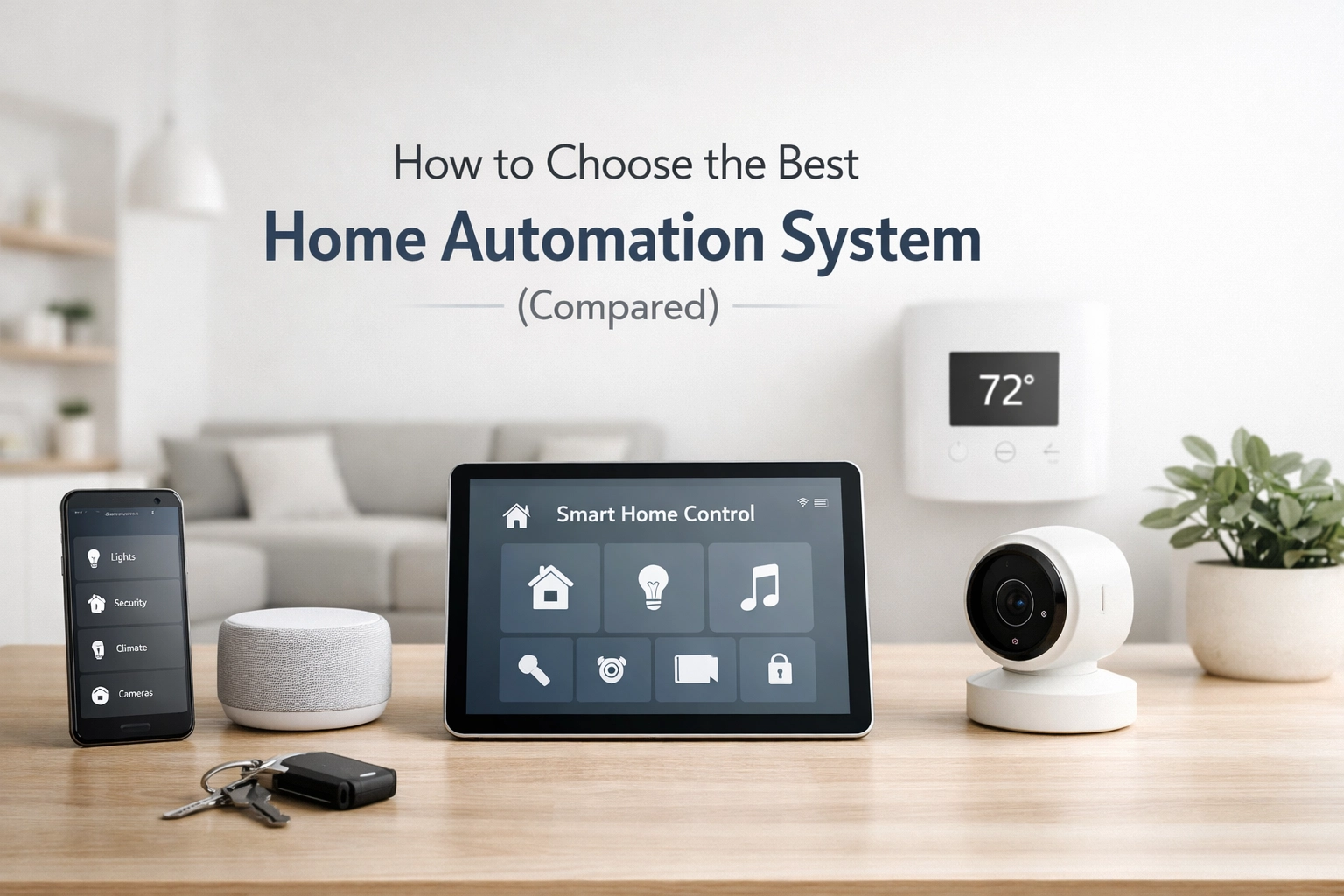
There's a particular moment that happens in most homes, usually on a Tuesday evening when the rain's drumming against the windows and you're juggling three different apps just to dim the lights, adjust the heating, and check who's at the door. It's the moment when "smart" starts to feel decidedly... stupid. The promise of a seamlessly connected home automation system feels less like convenience and more like you've accidentally enrolled in a part-time IT course you never signed up for.
The truth is, choosing the right home automation approach isn't about finding the system with the most features or the flashiest interface. It's about understanding how technology should fit into the rhythms of your life: not the other way around.
The Great Divide: DIY vs Professional Installation
The home automation landscape has evolved into two distinct camps, each with passionate advocates and legitimate merits worth considering.
The DIY Approach appeals to the tinkerers, the weekend warriors who find genuine satisfaction in unboxing components and methodically working through installation guides. Off-the-shelf systems from brands you'll recognise offer plug-and-play simplicity: smart speakers here, a video doorbell there, perhaps a few intelligent bulbs scattered throughout. The initial investment tends to be lower, and there's undeniable appeal in the immediacy of it all: order today, install tomorrow, automation by the weekend.
But here's where the glossy marketing collides with lived experience. That Ring doorbell doesn't communicate with your Philips Hue lights. The Nest thermostat exists in its own ecosystem, blissfully unaware of your Google Home speakers in the next room. You're not building a smart home; you're assembling a collection of smart devices that happen to share the same Wi-Fi network. When something goes wrong: and eventually, something always goes wrong: you're on your own, armed with nothing but YouTube tutorials and an increasingly frayed temper.
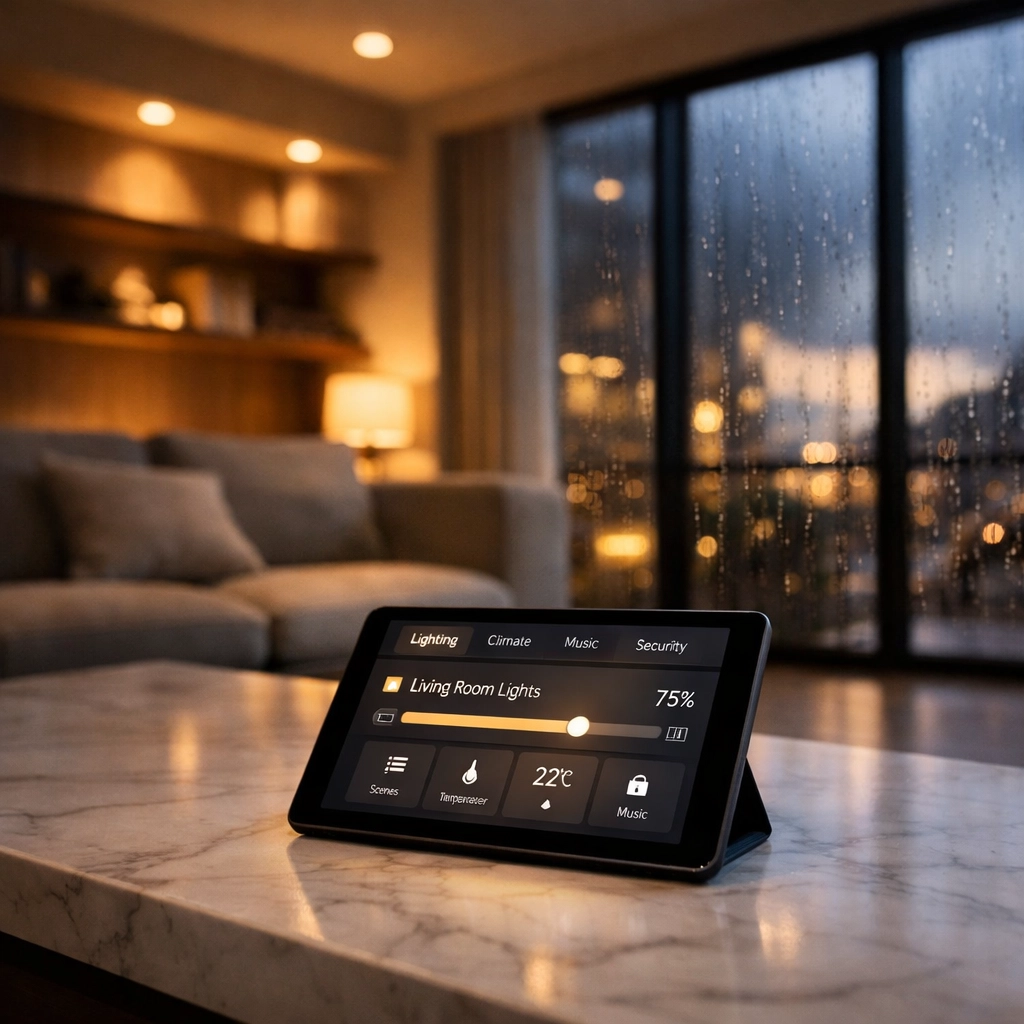
Professional Smart Home Installation represents a fundamentally different philosophy. Rather than acquiring products, you're investing in a properly designed system where every component has been selected to work harmoniously with every other component. The upfront cost is higher, certainly, but that investment buys you something DIY can never truly deliver: cohesion.
When Liv. approaches a home automation project, we're not just installing gadgets. We're designing an invisible infrastructure that anticipates how you actually live. The lights don't just turn on; they adjust based on time of day, natural light levels, and which room you've entered. Your heating doesn't simply respond to a schedule; it learns your patterns and adapts accordingly. Security doesn't mean managing five separate apps; it means a single, intuitive interface that provides genuine peace of mind.
Centralised vs Decentralised: The Architecture That Matters
Beyond the installation debate lies an even more fundamental choice: how your home automation system is actually structured.
Decentralised systems: the typical result of DIY approaches: operate like independent city-states. Each device connects directly to your router, communicates with its manufacturer's cloud servers, and functions (or fails to function) in isolation. It's democracy in action, which sounds wonderful until you realise that democracy without coordination is just chaos with better marketing.
The vulnerabilities multiply quickly. Internet goes down? Half your home stops responding. A manufacturer discontinues cloud support? Those expensive smart blinds you installed last year become expensive regular blinds. Want to create a "good morning" scene that adjusts lighting, temperature, and music simultaneously? Prepare for the digital equivalent of herding cats.
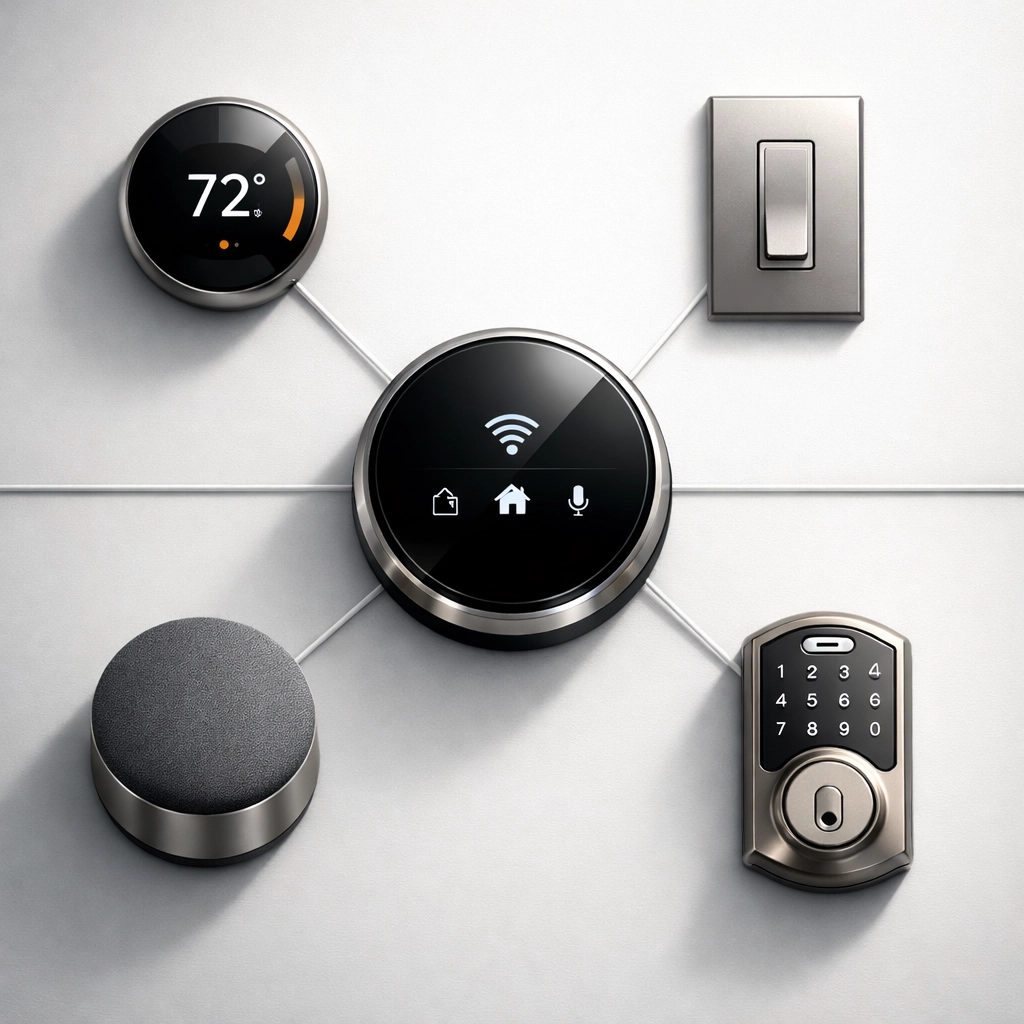
Centralised systems route everything through a single, powerful hub: a conductor orchestrating your home's technological symphony. This is where professional home automation truly distinguishes itself. At Liv., we typically deploy systems built around robust control platforms that process locally, reducing cloud dependency and dramatically improving reliability and response times.
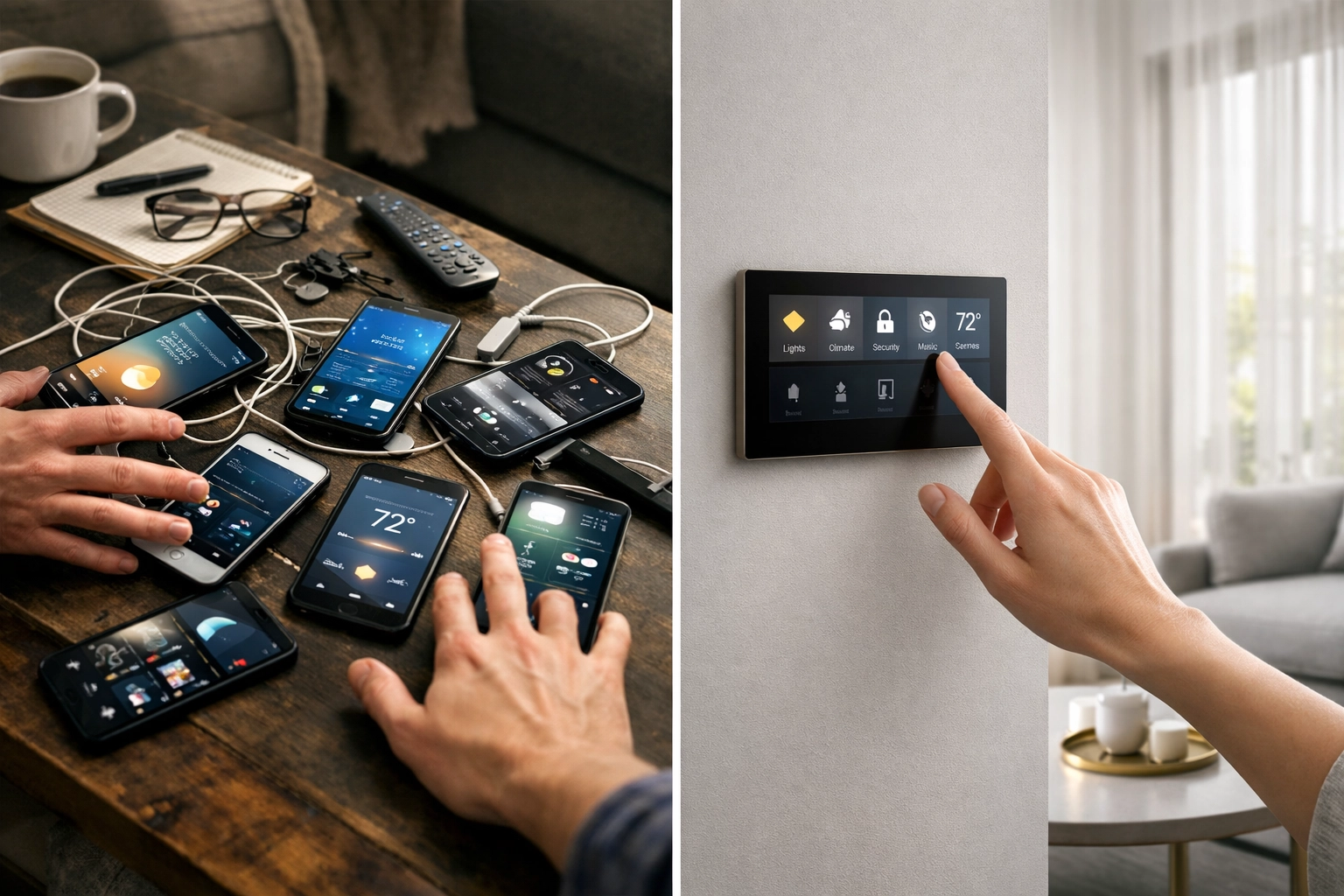
The benefits cascade beautifully. When every device speaks the same language through a unified system, creating automation becomes intuitive rather than technical. Press "goodnight" on a single interface, and your entire home responds: doors lock, lights dim on a gentle curve, heating adjusts, security arms itself. No apps, no delays, no wondering whether the smart plug in the bedroom actually registered the command.
The Professional Standard: Why HTA Certification Matters
In an industry awash with self-proclaimed "experts" and weekend installers, the Home Technology Association (HTA) certification serves as a crucial benchmark that separates genuine professionals from enthusiastic amateurs.
HTA members aren't simply technicians who've learned to connect wires and configure apps. They're trained to understand the broader ecosystem of home technology: how different protocols interact, how to design systems that scale gracefully, how to integrate security, lighting, audio-visual, and climate control into a cohesive whole. They stay current with rapidly evolving standards, maintain relationships with premium manufacturers, and crucially, they're accountable to professional standards that DIY installations simply cannot match.
When you engage an HTA-certified installer like Liv., you're not just buying their time: you're buying their expertise, their access to commercial-grade equipment unavailable to retail consumers, and their commitment to systems that will remain supportable years down the line. It's the difference between someone who can follow instructions and someone who understands the principles beneath those instructions.
Finding Your Perfect Balance: A Framework for Decision-Making
Choosing your home automation approach requires honest assessment across several dimensions:
Technical Comfort Level
If troubleshooting connectivity issues sounds like a fascinating puzzle rather than a recurring nightmare, DIY systems might suit your temperament. But if technology should be invisible: working flawlessly without demanding your attention: professional installation delivers that disappearing act.
Long-term Vision
Buying a smart speaker is a transaction. Designing a home automation system is an investment. If you're planning to stay in your home for years, the value of professional installation compounds dramatically. You're not just buying capability; you're buying reliability, support, and the peace of mind that comes from knowing your system was designed properly from the foundation up.
Lifestyle Integration
The best home automation system is the one you stop noticing because it anticipates your needs before you articulate them. That level of seamless integration requires sophisticated programming and thoughtful design that extends far beyond connecting devices to Wi-Fi. It means understanding how light affects your evening wind-down routine, how temperature fluctuations impact your sleep quality, how security automation can provide protection without creating friction.
Budget Reality
Professional installation costs more initially: there's no dancing around that fact. But the calculation shifts when you account for the cost of abandoned DIY devices that never quite worked properly, the time spent troubleshooting instead of living, and the eventual realisation that you'll need professional help anyway to integrate everything properly.
How Liv. Creates Homes That Enhance Life
At Liv., our philosophy centres on a simple but powerful premise: technology should expand your capacity for living well, not demand your constant attention and management.
When we design a home automation system, we begin not with products but with conversations. How do you actually use your spaces? What frustrates you about your current setup? What would genuinely make your daily rhythms smoother? From those discussions, we craft systems that feel less like technology and more like your home becoming more intuitive, more responsive to your needs.
Our installations typically integrate lighting that adapts to natural rhythms, climate control that learns your preferences, security that operates seamlessly in the background, and entertainment systems that deliver cinematic experiences without requiring a degree in AV engineering. Every element communicates through a unified system, controllable through elegant interfaces that make sense the moment you touch them.
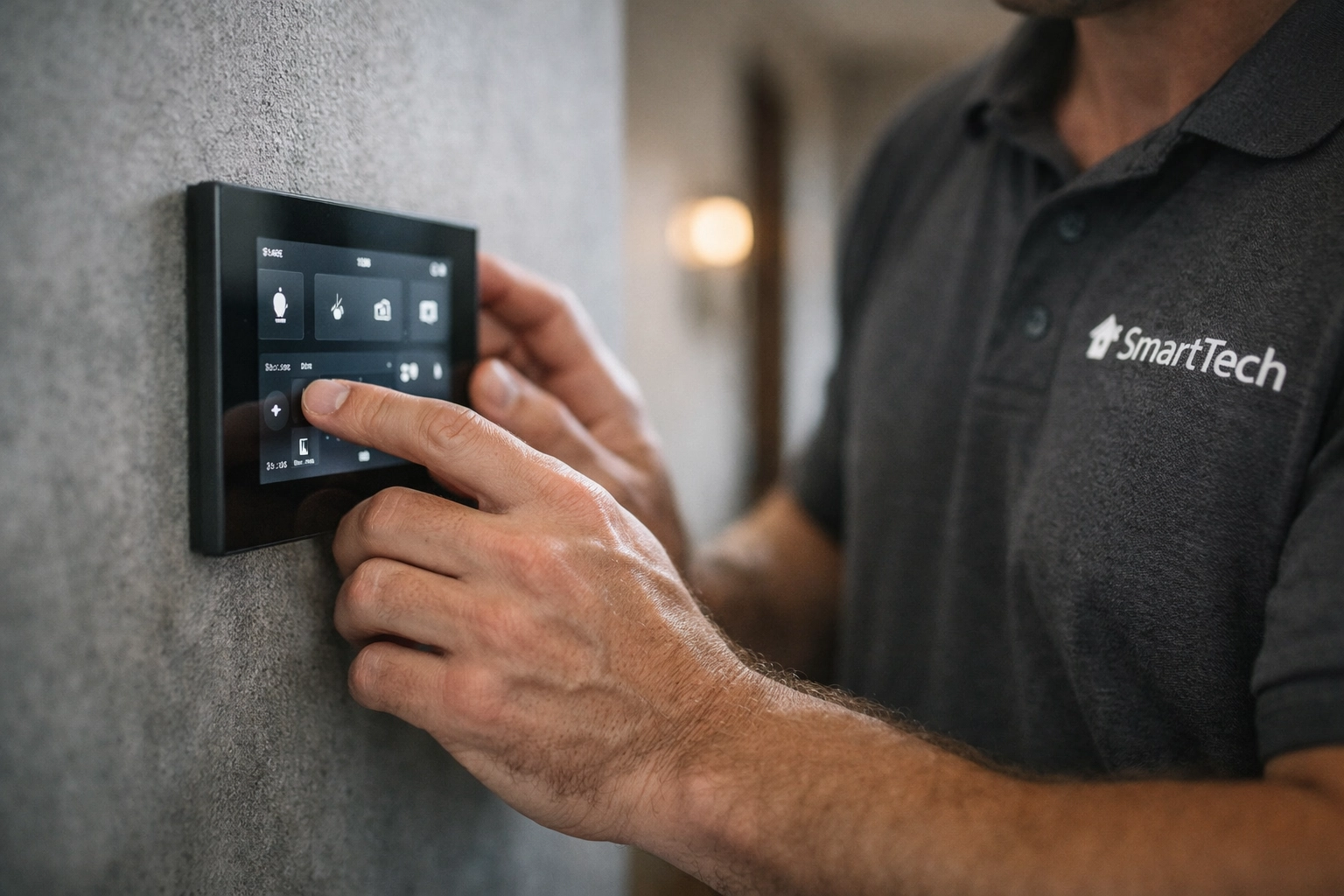
We maintain relationships with premium manufacturers like Savant, giving our clients access to technology that prioritises reliability and longevity over flashy features that rarely get used. And because we're HTA certified, our installations meet rigorous professional standards backed by genuine expertise and ongoing support.
Perhaps most importantly, we design systems that grow with you. Proper planning from the outset means your home automation system can expand gracefully as your needs evolve, without requiring expensive retrofits or starting from scratch.
Making the Decision That's Right for Your Home
The "best" home automation system isn't determined by specifications or feature lists: it's defined by how well the technology disappears into the fabric of your daily life, working so seamlessly you forget it's even there.
For some, DIY systems provide adequate functionality and a satisfying hands-on experience. For others, the peace of mind that comes from professional design, proper integration, and reliable support represents value that transcends initial cost considerations.
The hidden cost of postponing proper planning often exceeds the investment in getting it right from the beginning. Poor infrastructure, incompatible devices, and patchwork solutions create friction that accumulates over time, transforming your "smart" home into a source of ongoing frustration rather than effortless convenience.
If you're contemplating home automation and wondering which path makes sense for your particular situation, we'd welcome the conversation. Sometimes the most valuable thing we offer isn't installation: it's clarity about what's actually possible when technology is designed thoughtfully around the way you want to live.
Because at the end of the day, the best home automation system is the one that gives you back your Tuesday evenings: no juggling apps, no troubleshooting connections, just a home that responds intuitively to your needs, allowing you to focus on what actually matters: living well.