
The Efficiency of Elegance: How Smart Lighting and Shading Slash Your Energy Bills

There's something quietly wasteful about the way most homes consume energy: lights blazing in empty corridors, blinds drawn against the midday sun whilst artificial lighting works overtime, switches forgotten in the rush of daily life. It's not negligence, exactly, but rather the limitation of static systems that demand constant human intervention, that rely on memory and habit rather than intelligent response. The modern home, for all its architectural beauty and carefully considered finishes, often operates with a surprising lack of efficiency when it comes to something as fundamental as light.
This is where professional home automation reveals its true value: not merely as a luxury or a convenience, but as a sophisticated tool for energy conservation that pays dividends month after month, year after year. Smart lighting and shading systems don't just create ambience; they fundamentally transform how your home consumes power, reducing waste without compromising comfort or aesthetic integrity.
The Invisible Power of Dimming
Consider this: running your lights at 90% brightness instead of full output. The difference to your eye is imperceptible: barely noticeable in most residential settings: yet the energy savings accumulate with quiet consistency. More remarkably, this modest reduction extends the lifespan of your bulbs significantly, delaying replacement costs and reducing the environmental impact of manufacturing and disposal.

A properly specified home automation system doesn't simply offer dimming as a feature you might occasionally remember to use. Instead, it weaves intelligent dimming into the fabric of your daily routine through programmed scenes that respond to the time of day, the season, and the specific requirements of each space. Morning scenes might bring lights up gently to 75% as natural light begins filtering through eastern windows. Evening scenes dim to warmer, lower levels as the day winds down, creating comfort whilst consuming a fraction of the energy that full brightness demands.
The sophistication lies in the precision. Unlike standard dimmer switches that often introduce flicker or incompatibility with certain LED drivers, professional smart home installation ensures that every fixture, every control protocol, and every bulb specification works in harmony. The result is smooth, silent dimming that never draws attention to itself: yet saves energy with every adjustment.
Research confirms what integrators have observed for years: automated LED systems typically reduce lighting electricity consumption by 60-80% compared to conventional, manually operated systems. For a family home, this translates to hundreds of pounds annually: a return on investment that continues to compound over the decades-long lifespan of a properly installed system.
Never Leaving a Room Behind
The hallway light left on overnight. The guest bathroom blazing away for hours after a visitor's brief use. The garage illuminated whilst the car sits elsewhere. These small oversights accumulate into significant waste, not through carelessness but simply because human memory is fallible and daily routines vary.
Occupancy and vacancy sensors solve this with elegant simplicity. The technology distinguishes between the two approaches: occupancy sensors automatically switch lights on when motion is detected and off when the room remains vacant for a preset duration. Vacancy sensors require manual activation but automatically switch off after detecting prolonged absence: ideal for spaces where false triggering would prove annoying.

The beauty of integrating these sensors within a comprehensive home automation system rather than installing standalone products lies in the coordination. Your system learns patterns, adjusts sensitivity based on the time of day, and coordinates with other environmental controls. A bedroom vacancy sensor, for instance, might not only switch off lighting but also adjust the heating setpoint and close motorised blinds: creating a cascade of energy savings from a single trigger.
This intelligence extends beyond simple on-off functionality. PIR sensors can be programmed to dim lights to 30% rather than complete darkness for night-time navigation, providing safety whilst minimising energy use. They can differentiate between brief passage through a space and extended occupancy, adjusting their response accordingly. When specified and installed by professionals who understand both the technology and the architecture of your home, these sensors become virtually invisible: flush-mounted, colour-matched to ceilings and walls, operating silently in the background of daily life.
The Peace of a Single Press
There's a peculiar modern anxiety that accompanies leaving home: the nagging uncertainty about whether you've switched everything off. Did the kitchen lights get turned out? What about the reading lamp in the study? The bedside lights?
An 'All Off' scene eliminates this entirely. A single button press on a Lutron Palladiom keypad: located at your front door, your bedside table, or accessible through your mobile device: ensures that every light in your home switches off simultaneously. The peace of mind this provides extends beyond mere convenience; it represents a fundamental shift in how you interact with your home's systems.
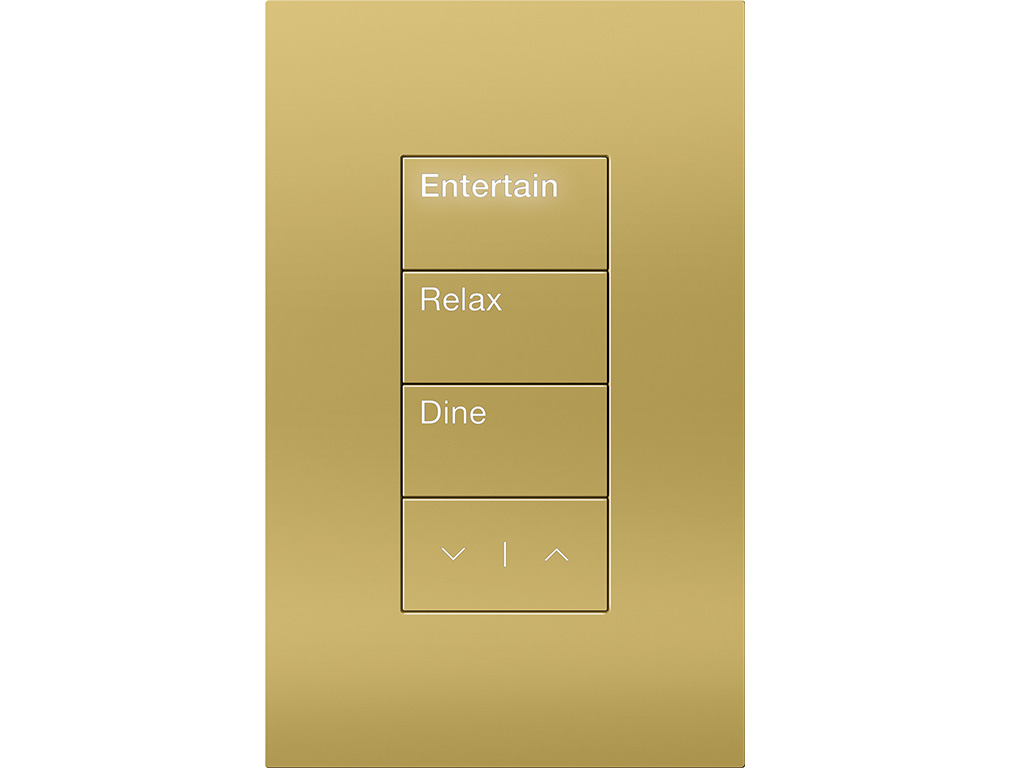
But the energy implications go deeper than simply remembering to switch things off. An 'All Off' scene can be programmed to activate automatically when your security system arms, or when your home detects that all occupants have left the property. It can trigger at a specific time each evening if motion hasn't been detected in any room for an extended period. These automated sequences ensure that energy isn't wasted even when you forget, or when routines change unexpectedly.
The sophistication of a proper smart home installation allows for nuanced control within these scenes. Perhaps your 'All Off' doesn't actually switch everything off: it might leave perimeter lighting at 20% for security, maintain low-level lighting in hallways for safety, and keep certain systems active that require continuous power. This level of customisation ensures efficiency without compromising functionality or wellbeing.
Precision Control Across Premium Fixtures
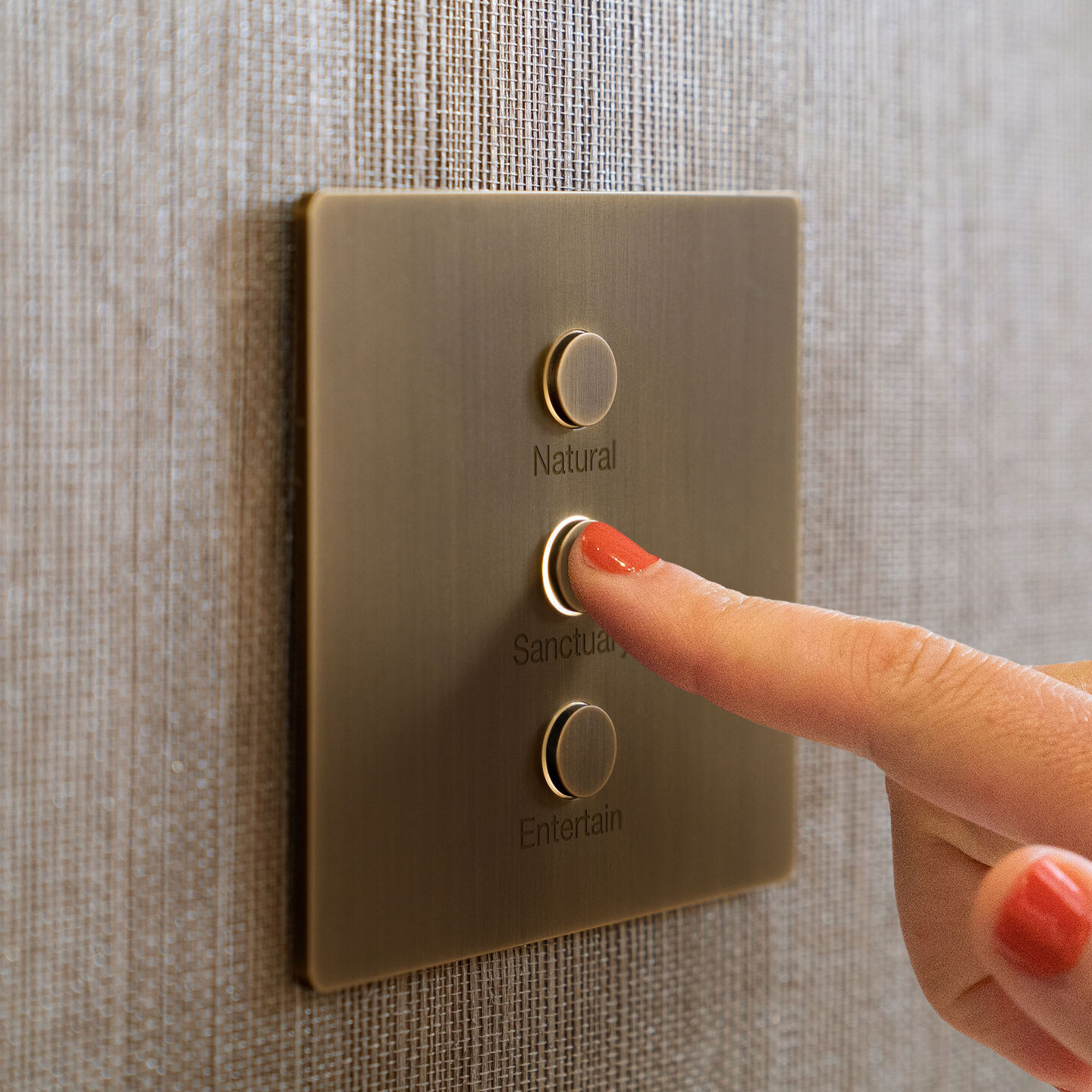
Energy efficiency in lighting isn't solely about switching things off or dimming them down: it's also about ensuring that every fixture operates at peak efficiency, that drivers and bulbs work in harmony, and that control protocols communicate flawlessly. This is where professional smart home installation reveals its technical depth.
High-end lighting fixtures from manufacturers like Lutron, Delta Light, or Flos require specific dimming protocols: DALI, 0-10V, or phase dimming: to function correctly. Mismatched systems introduce flicker, premature failure, and excessive energy draw. With Lutron HomeWorks integration at the core, a professionally installed system ensures compatibility across every fixture, every driver, and every control point, maximising both the lifespan and efficiency of your lighting investment.
Moreover, intelligent systems can integrate lighting with automated shading to create a coordinated approach to natural and artificial light. As the sun moves across the sky, motorised blinds adjust to optimise natural light penetration whilst preventing glare and unwanted solar heat gain. The lighting system responds in real-time, dimming artificial sources as natural light becomes available, brightening them as clouds pass or evening approaches.
This dynamic balance between natural and artificial light represents the pinnacle of energy efficiency in residential design. Rather than treating lighting and shading as separate systems, professional integration creates a unified response to changing conditions: one that prioritises comfort and visibility whilst minimising energy consumption.
The thermal benefits shouldn't be overlooked either. Automated shading that responds to solar angles and temperature sensors can reduce cooling loads in summer by up to 25%, whilst strategic opening during winter months allows passive solar heating to supplement your HVAC system. When coordinated with intelligent lighting that adjusts to these changing conditions, the combined savings significantly exceed what either system could achieve in isolation.
The Long View
The initial investment in professional smart lighting and shading might seem substantial when compared to standard electrical installation. Yet the mathematics shift dramatically when viewed across the decades-long lifespan of these systems. Energy savings compound year after year. Bulb replacement costs diminish. HVAC systems work less intensively. The cumulative financial return often surpasses the initial expenditure within five to seven years: whilst the environmental benefits begin immediately.
Beyond the purely financial calculation lies something more valuable: the elevation of daily life within a home that responds intelligently to your needs without requiring constant intervention. Lights that adjust themselves, blinds that optimise comfort and efficiency, scenes that create the perfect environment at the touch of a button: this is technology that enhances rather than complicates, that serves rather than demands attention.
For those considering a smart home installation, the question isn't whether smart lighting and shading can reduce energy consumption: the evidence is overwhelming. Rather, it's whether to settle for basic automation or invest in professional integration that delivers efficiency, elegance, and enduring value. The difference between the two approaches reveals itself month after month, in energy bills that remain stable despite rising costs, in systems that continue performing flawlessly years after installation, in the quiet satisfaction of a home that simply works( beautifully, efficiently, intelligently.)